
About US
FUTURE PROJECTS
At present, the financial crisis of the organization has manifested itself.
The following operations/forecast are required further funding necessary for healthier monetary support and financial sponsors in order to proceed and continue to provide health care for those destitute, helpless and river erosion miserable extremely poor people of the Char Algi and the surrounding villages:
1. Free medicine: Provide free medicine to complex patients.
2. Chronic Disease Treatment: Ensure long-term supply of medicines for the treatment of Chronic diseases such as diarrhea, diabetes, blood pressure, heart disease, pregnant women and long term other diseases.
3. Post-operative follow-up: Post-operative for minor cuts and wounds is required to complete medical care.
4. Pathology and X-ray: Provide full treatment to the patients as there is no pathology and X-ray department.

5. Mother and Child Healthcare: Mother and child healthcare is the highest priority in poverty health care. On the one hand it is the most cost effective. On the other hand it has the largest teaching component and is the most effective in promoting health, nutrition, hygiene and family planning awareness.
6. Diabetes Treatment: Diabetes mellitus is a major global health problem, affecting 382 million people, accounting for 5.3 million deaths in 2013. By 2035 the number of affected people is expected to increase to 592 million globally. About 80% of adults with diabetes live in low- and middle-income countries. Diabetes has become the seventh leading attributable risk factor for burden of disease in South Asian countries. Previously diabetes was a disease of the affluent, but now it has become a major public health problem in low- and middle-income countries, particularly affecting South Asians. The economic and disease burden associated with non-communicable diseases especially diabetes puts enormous pressure on fragile health systems in low-income countries. In the South Asian region, Bangladesh has the second largest number of adults with diabetes (5.1 million adults, 6.31%). Therefore, understanding the extent to which households or populations are not being diagnosed, treated, and controlling their diabetes condition may reveal opportunities to reduce premature death, disability, and household economic shock.
7. Eye and Dental Camp: Initiative of annual or bi-annual Eye and Dental Camp could not be initiated due to lack of necessary monetary support and financial sponsors.
9. In need of trained Staff Members, Internee doctor and Specialist: These projects need approximately 60-70 staff members, many of them will be trained, enabling the project to continue running smoothly. All staff will take part in weekly training sessions, run by the senior paramedics. Also will require There are internee doctors and specialist as needed from the local Medical College and Hospital.
8. TB Program: Bangladesh has the world’s sixth largest TB problem. Prevalence is estimated to be 404 per 100,000 population. The national DOTS (Direct Observation Treatment, Short Term) program is now able to concentrate on MDR (multiple drug resistance), child, sputum negative and extra-pulmonary TB. Disease prevention is by poverty alleviation, health education, treatment of infected cases and BCG (for prevention of life-threatening childhood cases).
Treatment is six months (eight months for retreatment patients) which must be followed correctly (under observation) to prevent MDR which in Bangladesh is currently 1.4% in new cases and 29% in previously treated cases (World Health Organization, 2016). The National TB program has a culture and sensitivity screening system for suspect MDR patients followed up by referral for specialized management.
9. Lodging and Food: Reasonable accommodations should be provided, when need for those patients are requires minor surgery and post-operative treatments. And also the need to provide reasonable accommodations to those patients unsupervised children.
10. Pure Water: Finding a supply of pure water is an everyday problem for coastal villagers. The high level of salinity in groundwater in coastal areas makes it undrinkable. For the same reason, river water is also unusable. Ponds and water tanks have been set up by the government and aid agencies like Caritas to preserve rainwater for filtering and daily use in some villages. The system is inadequate but villagers try to keep their body and soul together with what they have. The problem reaches boiling point during winter and summer when rainfall stops and most of the surface water sources dry up.
Currently financial sponsors are required to manage the above issues on real basis.
Our future goals are to expand the healthcare services to other remote areas of Bangladesh and surrounding South Asian countries like India, Nepal, Bhutan, Pakistan and Afghanistan and Also Africa.
With your generous help, we’d be able to extend free heath care to more destitute, helpless and river erosion miserable extremely poor people. Together we can reach our goal and bring GivingCare to life! We’d like to thank you for any help you’d be able to offer.
GivingCare Charitable Clinic is situated in Char Algi Village, Ramgati Upazila, Lakshmipur district in Chittagong division in Bangladesh. It has 59,387 households and a total area of 570 .55 sq-km. According to the 1991 Bangladesh census, Ramgati had a population of 335,243. Males constituted 51.57% of the population, and females 48.43%. The population aged 18 or over was 146,035. Ramgati has 1 municipality, 9 Unions/Wards, 57 Mauzas/Mahallas, and 69 villages.
About US
GivingCare Health Initiative
Providing Free Health Services to the Destitute and Displaced of Char Algi and Surrounding Villages
Current Situation
Char Algi and surrounding remote villages are home to some of the most destitute, vulnerable, and river erosion-affected populations. A severe financial crisis has halted the operations of our health care initiative, which was previously a lifeline for these communities. To continue providing essential services and scale our efforts, we urgently require financial sponsorship and sustained monetary support.
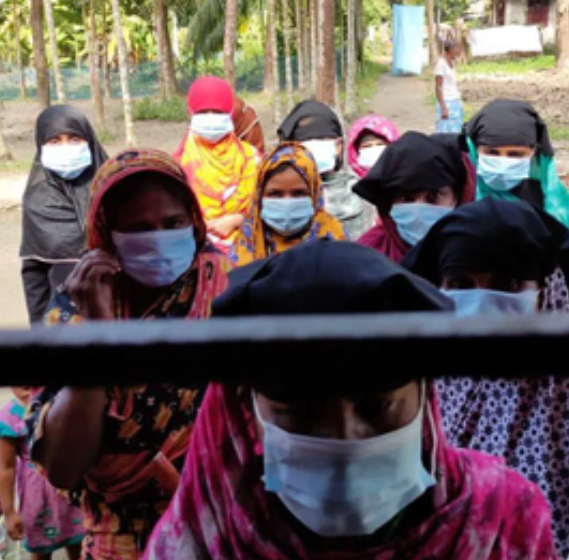
Key Health Interventions Requiring Immediate Funding
- Free Medicine Distribution
Provision of essential medicines to impoverished patients suffering from various health conditions, including complex cases requiring regular medication. - Chronic Disease Treatment
Long-term management of chronic diseases like diabetes, hypertension, cardiovascular diseases, gastrointestinal disorders, and maternal health issues. This includes regular medication supply and patient follow-ups. - Post-Operative Follow-Up Care
Continued care and monitoring for minor surgeries, wounds, and cuts to prevent infections and complications. - Pathology and X-Ray Facilities
Establishment of basic diagnostic services, as there is currently no functional pathology or radiology department in the area. - Mother and Child Healthcare
Prioritized maternal and child health services, including prenatal care, immunization, nutrition counseling, hygiene awareness, and family planning—offering both immediate impact and long-term community benefit. - Diabetes Management Program
Given the growing burden of diabetes, especially in low-income settings like ours, we aim to provide regular screening, education, medication, and monitoring to prevent long-term complications and premature deaths. - Annual Eye and Dental Camps
Implementation of bi-annual camps to address unserved eye and dental care needs—currently halted due to lack of funds. - Tuberculosis (TB) Prevention and Treatment Program
Support for the national DOTS program, especially for multi-drug-resistant cases, extra-pulmonary TB, and child TB, with an emphasis on early detection, treatment adherence, and public health education. - Human Resources and Training
Recruitment and training of 60–70 staff, including internee doctors and specialists from local medical colleges. Continuous professional development through weekly sessions will ensure service quality and sustainability. - Lodging and Nutritional Support
Safe and hygienic accommodation and food support for post-operative patients and those with unsupervised children or long-term treatment needs. - Access to Pure Water
Installation of rainwater harvesting systems and filtration units to provide clean drinking water, combating widespread issues caused by salinity and seasonal water scarcity.
Our Vision for the Future
With your support, GivingCare Health Initiative plans to expand our healthcare outreach to other neglected and underserved regions in:
- Bangladesh
- South Asia (India, Nepal, Bhutan, Pakistan, Afghanistan)
- Africa
Our goal is to replicate this model of sustainable, community-based healthcare across regions facing similar socio-economic and environmental challenges.
How You Can Help
Your generous contributions—financial, material, or in-kind—can transform lives. Here’s how your support will make a difference:
- Ensure lifesaving treatment for thousands of patients annually.
- Provide mothers and children with access to essential health services.
- Help control the spread of infectious and chronic diseases.
- Support health infrastructure development in neglected rural areas.
- Build a trained workforce from within these communities.
Conclusion
This is not just a health project—it is a mission of hope, dignity, and survival. By supporting GivingCare, you are helping to restore the fundamental right to healthcare for those who need it most. Together, we can create a healthier, more compassionate world.
Thank you for your consideration and support.
Contact Us
GivingCare Charitable Clinic is situated in Char Algi Village, Ramgati Upazila, Lakshmipur district in
Chittagong division in Bangladesh. Ramgat